
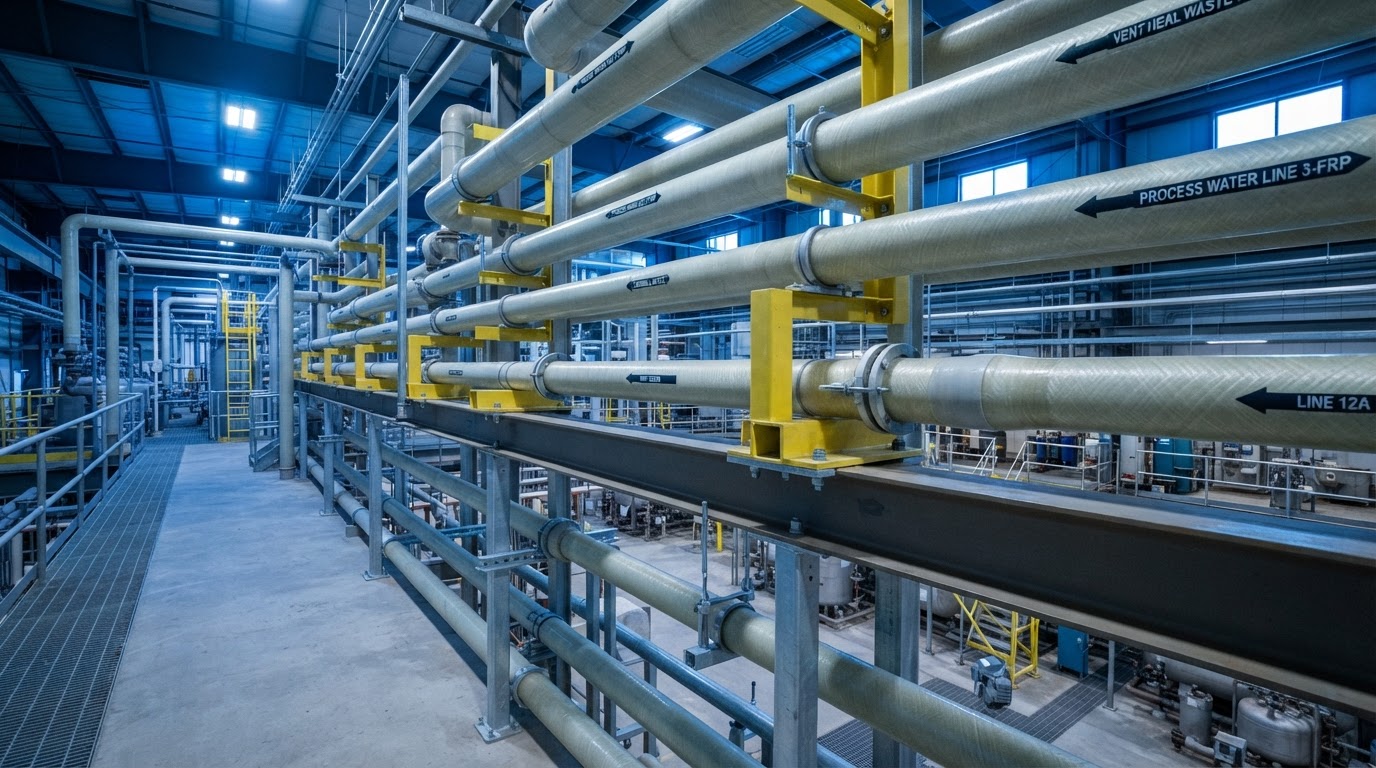
In an era increasingly defined by infrastructure renewal and technological advancement, the piping industry stands at a transformative crossroads. FRP and thermoplastic piping systems, once considered niche or specialty solutions, have emerged as frontrunners in the race to modernize global infrastructure.
Their unique balance of durability, corrosion resistance, adaptability and cost makes them ideal for a wide range of applications, from municipal water systems to mineral processing to offshore energy projects. As these and other industries seek smarter, more reliable solutions to traditional materials, the next five years promise a dynamic evolution in how we design, deploy and maintain piping networks.
Here is just some of what we have been seeing in the Maverick crystal ball:
A Surge in Construction and Municipal Applications
Urbanization and infrastructure renewal are major drivers of FRP and thermoplastic adoption. Municipal water systems, sewage networks, and stormwater management projects increasingly favor these materials for their longevity and resistance to contamination. In construction, data centers with immense power and cooling needs are being built all across the country. As cities and industries modernize, these materials will become standard in public works.
Material Innovation and Composite Advancements
The next five years will see continued innovation in composite materials. FRP pipes, traditionally made with glass or carbon fibers in epoxy or polyester matrices, are evolving to include hybrid reinforcements and advanced resins that improve thermal stability and mechanical strength. Thermoplastic composites, particularly thermoplastic composite pipes (TCP), are gaining traction in subsea and fracking operations due to their flexibility and ease of installation. These innovations will expand the range of applications and improve lifecycle performance.
Regional Dynamics and Regulatory Influence
Environmental regulations are shaping market dynamics across regions. In Europe, stringent EU policies on recyclability and emissions are driving increased thermoplastic adoption in hydrogen pipelines and renewable energy projects. North America is investing heavily in water infrastructure and corrosion-resistant replacements, while Asia-Pacific leads in volume growth due to rapid industrialization and urban expansion. Regional preferences and policy frameworks will continue to influence material choices and innovation priorities.
A Future Defined by Resilience and Efficiency
By 2030, FRP and thermoplastic piping will be central to resilient infrastructure systems. Their adaptability to harsh environments, compatibility with smart monitoring technologies, and alignment with circular economy principles make them indispensable. As industries seek solutions that balance performance, cost, and sustainability, these advanced piping systems will not only grow in market share but redefine how we build and maintain the world’s critical networks.
The FRP pipe market is projected to grow from $5.67 billion in 2024 to $9.15 billion by 2033, reflecting a compound annual growth rate (CAGR) of 5.5%. Similarly, the thermoplastic pipe market is expected to expand from $2.76 billion in 2025 to over $4 billion by 2035, driven by demand for flexible, corrosion-resistant solutions in offshore, municipal, and industrial applications. Investment in pipeline infrastructure – especially in Asia-Pacific and North America – is accelerating this growth, with governments and private sectors prioritizing resilient systems.
Despite this promising growth, the industry will face some challenges including raw material costs, skilled labor shortages for composite manufacturing, and standardization hurdles. To overcome these, manufacturers are investing in automation, modular pipe systems, and digital design tools. Strategic partnerships between material scientists, engineers, and infrastructure planners will be crucial to scaling production and ensuring quality across diverse applications. Maverick’s expertise in design, implementation and inspection of these systems, combined with our strong network of partners, make us your ideal resource for FRP and thermoplastic solutions as you move forward with your own projects.