
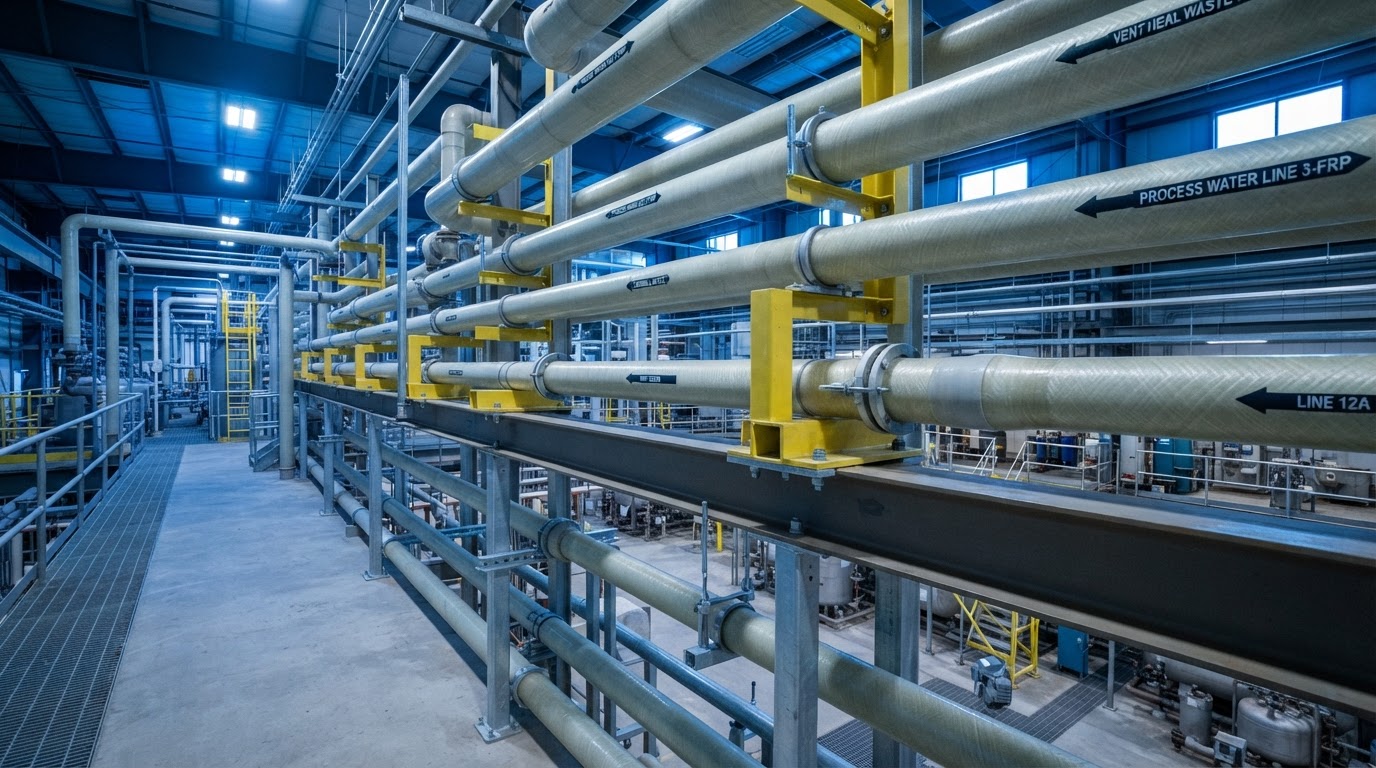
Regular inspection of plant assets, particularly of Fiberglass Reinforced Plastic (FRP) piping systems, yields a strong return on investment (ROI) by proactively identifying wear, corrosion, or structural weaknesses before they escalate into costly failures. FRP piping, while known for its corrosion resistance and durability, can still be susceptible to degradation from UV exposure, chemical attack, and mechanical stress. Routine inspections help ensure that these systems maintain their integrity, reducing the likelihood of unexpected breakdowns that can halt operations and incur significant repair costs.
The financial implications of a leak caused by neglected FRP piping can be severe. A single leak in a chemical processing plant, for example, can lead to environmental contamination, regulatory fines, and expensive emergency repairs. Beyond direct costs, there are indirect losses such as production downtime, labor inefficiencies, and reputational damage. By contrast, scheduled inspections – often involving visual checks, ultrasonic testing, and thermal imaging – are comparatively inexpensive and can be budgeted predictably, making them a financially prudent strategy.
Preventive maintenance through inspections also extends the lifespan of FRP piping systems. Catching minor issues early – such as delamination, cracking, or joint failures -allows for targeted repairs rather than full system replacements. This not only saves money but also reduces the frequency of capital expenditures. Over time, the cumulative savings from avoiding major overhauls and emergency interventions far outweigh the modest investment in regular inspections.
Moreover, regulatory compliance is a critical factor in ROI. Many industries, including petrochemical, water treatment, and mining, are subject to strict safety and environmental regulations. Regular inspections help ensure that FRP piping systems meet these standards, avoiding potential injuries and shutdowns. Compliance also supports insurance claims and lowers premiums, as insurers often reward proactive risk management practices.
Operational efficiency is another key benefit. Inspections help maintain optimal flow rates and performance and minimize system degradation, which is essential for consistent production quality. Leaks or blockages in FRP piping can disrupt these parameters, leading to product quality loss or compromised safety. By keeping systems in peak condition, inspections contribute to smoother operations and better resource utilization.
In terms of operating expense reduction, preventive maintenance based on inspections typically cuts costs by 12–18% compared to reactive approaches. These savings stem from reduced emergency labor rates, fewer rush-part premiums, and minimized downtime. Reactive maintenance can often cost as much as 25–30% more due to the urgency and disruption it causes.
In summary, the ROI of regular inspections for plant operations and FRP piping is multifaceted, encompassing cost avoidance, asset longevity, regulatory compliance, and operational reliability. The cost of a single leak due to negligence can dwarf the cumulative expense of years of routine inspections. Investing in a maintenance assessment program is not merely a maintenance strategy; it’s a financial safeguard that protects both the bottom line and long-term viability of industrial operations.
If you’re ready to set up regular inspections, or even just need guidance on what to look for, Maverick can help. Give us a call today to start realizing your ROI.